

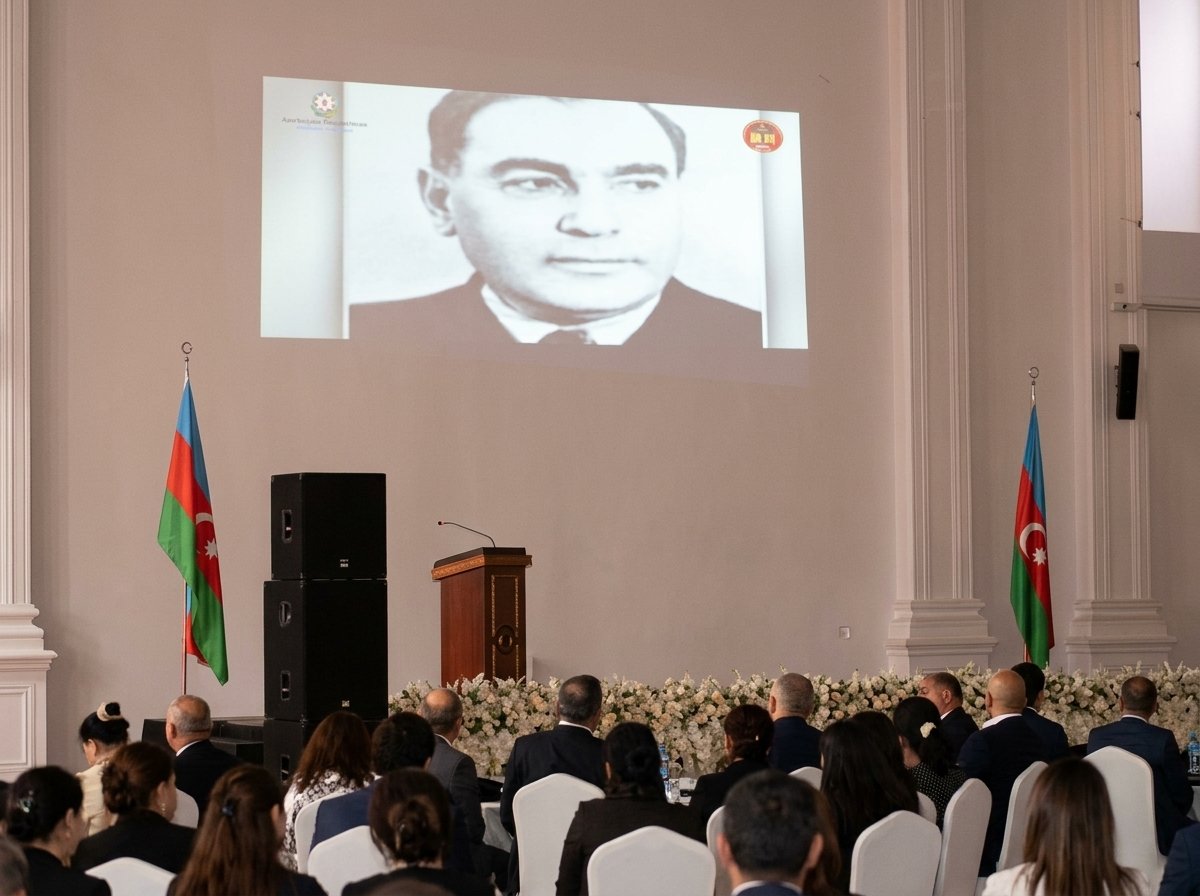
Azerbaijan held a scientific conference in Quba to mark the 130th birth anniversary of Aziz Aliyev, a prominent statesman and doctor of medical sciences, honouring his contribution to the country’s healthcare system. Five research papers were presented during the event.
The conference, organised under President Ilham Aliyev’s decree of 20 August 2026, brought together physicians, researchers and academics in Quba, a city in northern Azerbaijan, to celebrate the legacy of Aziz Aliyev. The event was jointly arranged by the Aziz Aliyev Azerbaijan State Advanced Training Institute for Doctors, which operates under the Ministry of Health, and the Quba District Executive Authority. Teaching staff from the institute also took part alongside medical professionals and scholars.
Before the formal programme began, participants visited the Heydar Aliyev monument in Quba to pay tribute to the memory of Azerbaijan’s national leader.
Officials recall Aziz Aliyev’s legacy
Ilgar Mahmudov, head of the Quba District Executive Authority, and Professor Nazim Panahov, rector of the Aziz Aliyev Azerbaijan State Advanced Training Institute for Doctors, both spoke about the late scientist’s role in shaping modern medicine in Azerbaijan. They noted that his efforts to train medical personnel and build healthcare institutions left a lasting mark on the country’s medical history.
Speakers stressed that holding such anniversary events in the regions plays an important part in studying Aziz Aliyev’s legacy and passing it on to younger generations. A documentary film covering his life and career was screened during the event.
Five research papers presented at the conference
The scientific portion of the programme featured five research presentations covering a range of current medical topics. These included digital solutions in orthognathic surgery, the use of amniotic tissue to reconstruct the neovagina in patients diagnosed with MRKH syndrome, modern diagnostic methods for cerebrovascular diseases, treatment approaches for knee ligament injuries, and the timely detection and treatment of jaw and dental defects.
The presentations drew strong interest from attendees and helped foster scientific exchange and professional development among the physicians present.
