

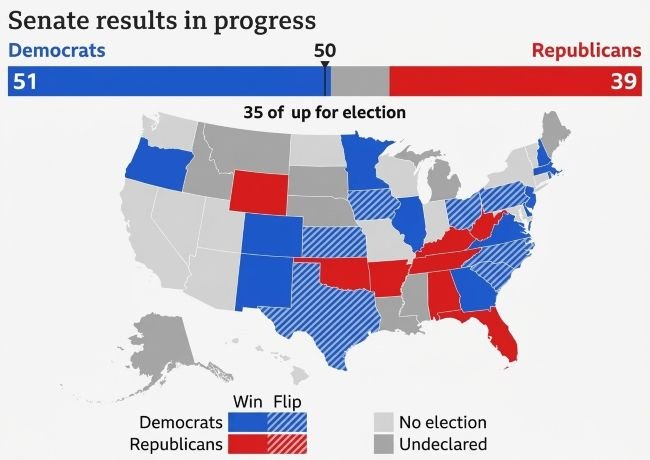
The dollar fell to its lowest level in more than a month after early returns from the US midterm elections showed Democrats gaining ground in both the Senate and the House of Representatives. Investors are betting a divided Congress will make sweeping fiscal changes harder to pass.
The dollar sell-off came as votes were still being counted, with the DXY index, which tracks the greenback against major currencies, dropping to its lowest point in more than a month. Markets typically read a split Congress as reducing the odds of large-scale budget and policy shifts, denting demand for the dollar as a safe-haven asset.
US Treasury yields also fell as investors moved money into government bonds. Adding to the pressure, US President Donald Trump told the Financial Times there was currently no intention to launch a military operation against Iran, a comment that eased geopolitical risk and weighed further on the dollar.
Weaker demand for the dollar lifted other currencies. The British pound sterling climbed to its highest level since September 16, breaking back above 1.3400, helped by market expectations that the Bank of England could raise interest rates at its upcoming meeting.
What the labor market data shows
The dollar’s decline came alongside a separate US labor market report showing job openings rose to 7.5 million in September, up from 7.2 million previously, a figure that typically reinforces expectations the Federal Reserve will tighten monetary policy.
The dollar’s slide tied to election uncertainty is feeding directly into major currency pairs such as EUR/USD and GBP/USD. Diminished expectations for major fiscal reform could also weigh on broader investor sentiment in equity markets.
Source: Praevis
