

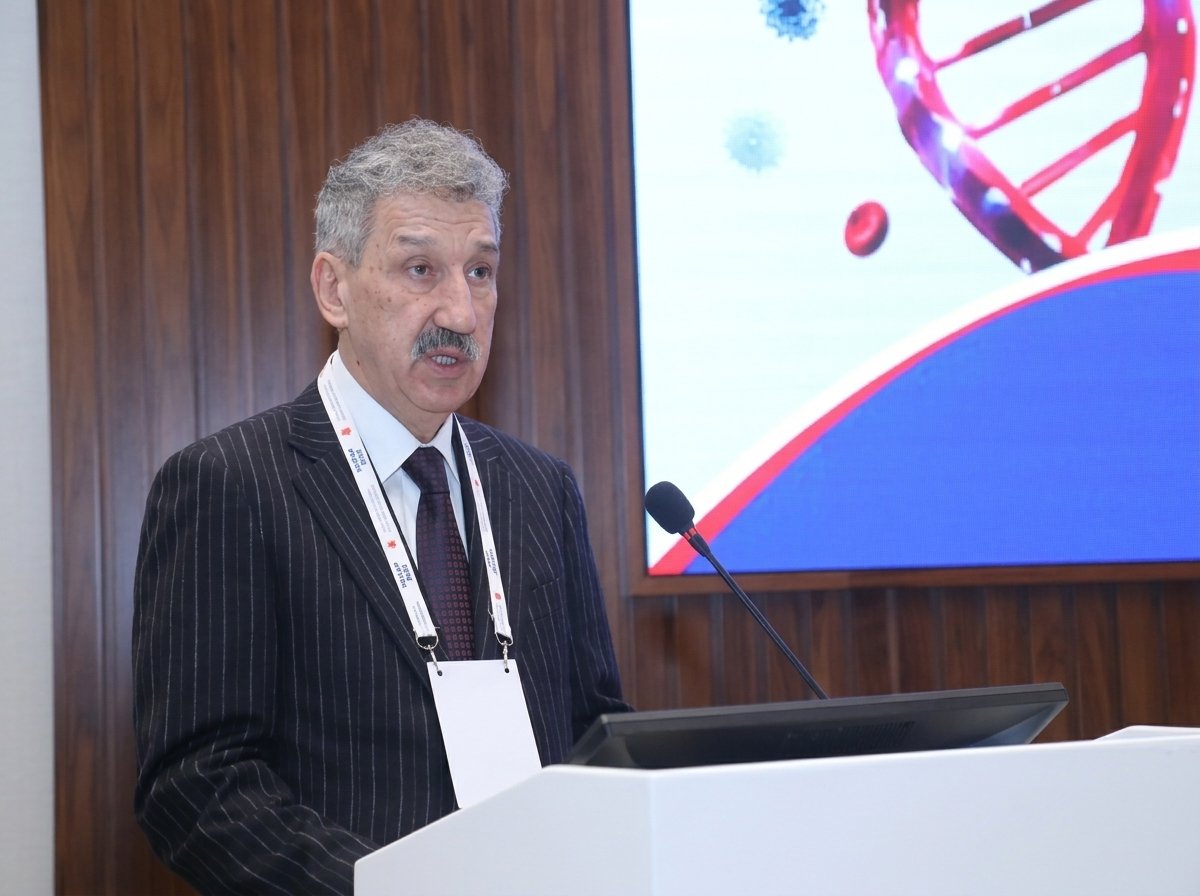
Strengthening a safe and sustainable blood supply is one of the main tasks facing Azerbaijan today, Sardar Asadov, executive director of the National Hematology and Transfusiology Centre, told the international conference “Topical Problems of Hematology (HEMAP 2026)”.
Advances in recent years in molecular genetic diagnostics, targeted therapy, immunotherapy, cell technologies, bone marrow transplantation, digital medicine and artificial intelligence have fundamentally changed the approach to diagnosing and treating many blood diseases, he said.
For several diseases where treatment options were once limited, doctors now talk about long-term remission, personalised treatment and protecting patients’ quality of life, Asadov said. But every new possibility science offers also brings new responsibility, he added.
He listed the main tasks as bringing modern diagnostic and treatment technologies into clinical practice in time, expanding personalised treatment, detecting rare diseases early and strengthening a safe and sustainable blood supply.
Call for international research cooperation
Clinical experience and research data gathered in Azerbaijan should be systematised and presented to the international scientific community, and Azerbaijani researchers should take a more active part in international multicentre projects, Asadov said.
He stressed the importance of involving young doctors and researchers in the international scientific environment: young people should not only be given ready knowledge but taught to think scientifically, carry out research and present their results to international audiences.
