

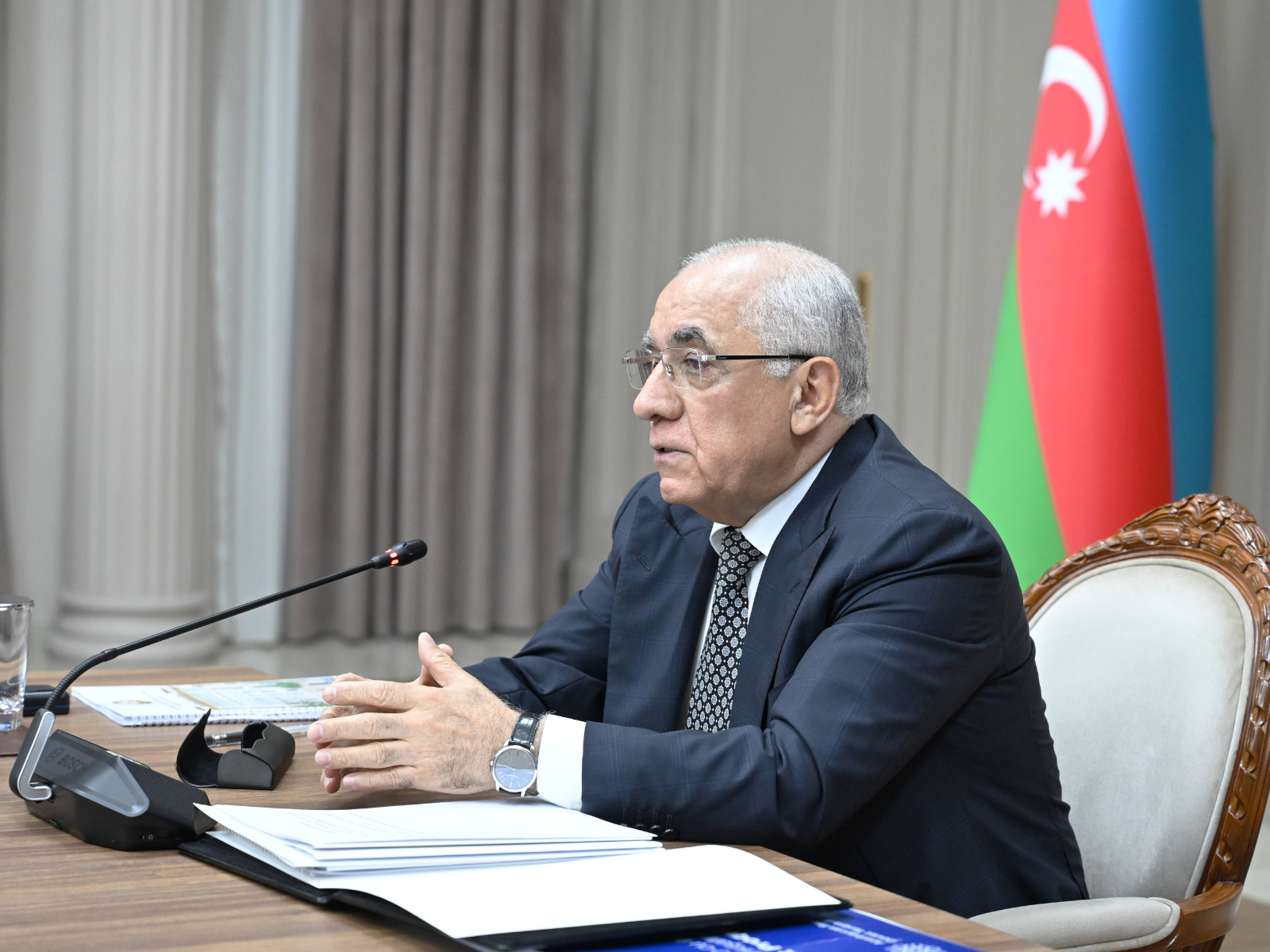
Azerbaijan’s Prime Minister signed the country’s long-term low-carbon development strategy on October 22, 2026, laying out a step-by-step path to net-zero emissions by 2060.
The net-zero emissions strategy sets an intermediate target of cutting greenhouse gas emissions by 40% by 2035 compared with 1990 levels, a milestone tied to the final 2060 goal. Under the approved document, Azerbaijan will pursue two parallel tracks to reach net zero: minimising the volume of greenhouse gases released into the atmosphere, and absorbing what remains through forest cover and other natural and technological solutions. The changes will gradually reach the energy, transport, industrial production, oil and gas extraction, agriculture, construction and waste management sectors.
As part of this shift, the share of solar and wind power will be increased, while households and industrial enterprises will be encouraged to save energy and the number of environmentally friendly vehicles will grow. At the same time, methane leaks during oil and gas extraction will be curbed, household and industrial waste will be sorted and recycled, and forest areas will be restored. The document notes these steps could create new jobs while opening the door to modern technological solutions.
2035 interim target and regional initiatives
The organisation of “green energy zones” in Karabakh, East Zangezur and Nakhchivan is cited as a key part of this process.
Azerbaijan’s Ministry of Ecology and Natural Resources led the preparation of the document as national coordinator, with other state bodies also involved. The strategy is to be submitted to the secretariat of the United Nations Framework Convention on Climate Change.
Foreign partnerships and financial support
The document demonstrates Azerbaijan’s contribution to its commitments under the Paris Agreement, while also giving foreign partners and investors a clearer picture of the country’s priorities. It is described as the next stage in turning climate commitments announced at the COP29 summit into concrete domestic action.
Climate finance agreements reached in Baku and ongoing diplomatic dialogue are expected to ease access to the financial resources and technology needed to implement the strategy. Meeting the 2060 target will require foreign financial assistance, concessional credit lines, grant programmes, the transfer of advanced technologies and private-sector investment, the document stresses.
Training skilled personnel, building new competencies and engaging the wider public are also listed among the factors that will shape the outcome of the transition. To communicate the strategy’s goals to society, open discussions involving scientific institutions, non-governmental organisations and civil society representatives are planned.
Read also: Azerbaijan approves long-term low-carbon development strategy
