

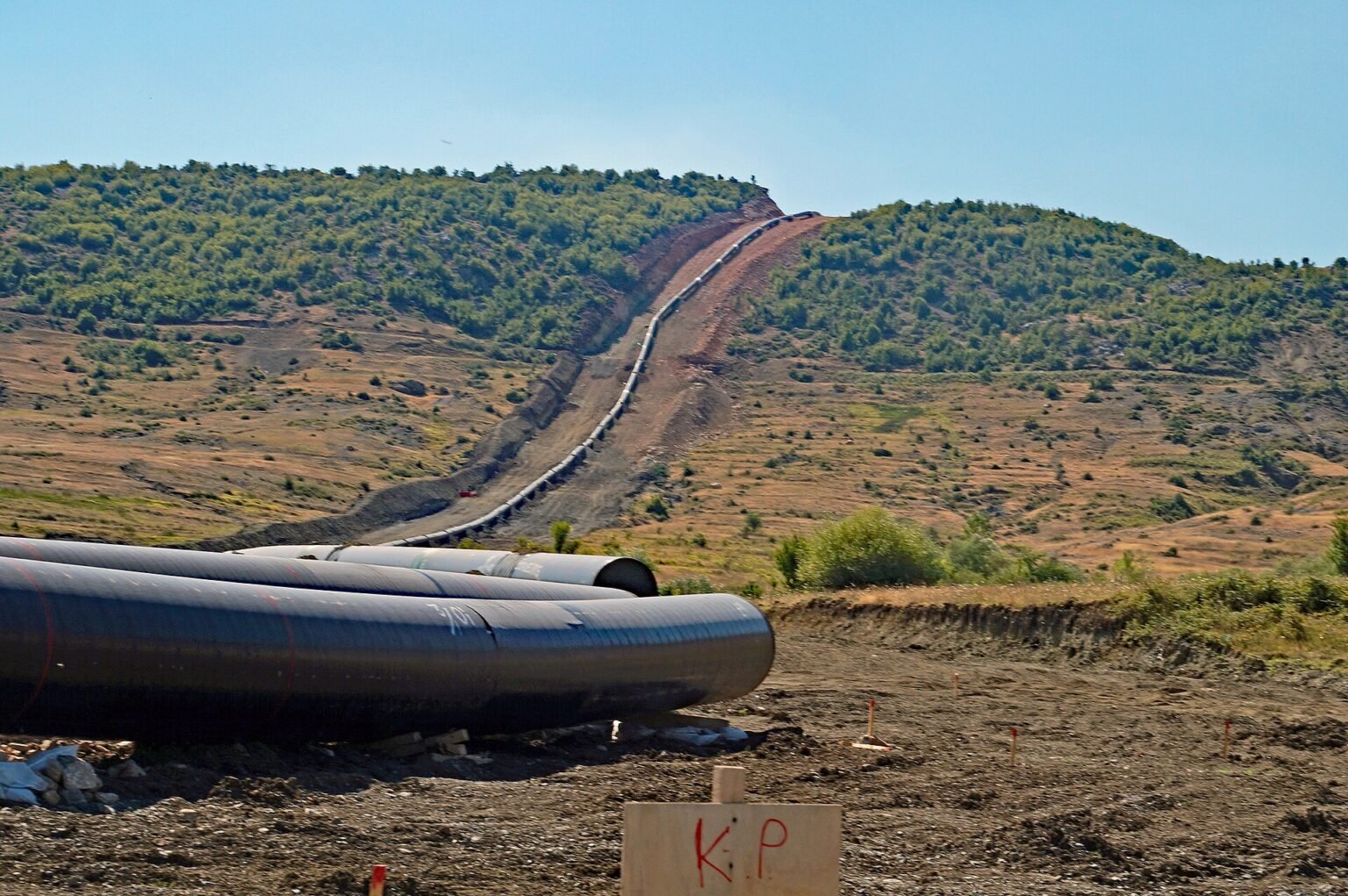
The International Energy Agency (IEA) forecasts that Azerbaijani gas exports to the European Union via the Trans Adriatic Pipeline (TAP) will remain largely unchanged this winter, as the pipeline is already running close to its maximum capacity.
According to the IEA’s “Global Gas Security Review 2026” report, the potential for Europe to increase pipeline gas supplies is limited because existing volumes are already operating close to nominal capacity. The agency says this assessment also applies to TAP, which carries Azerbaijani gas produced at the Shah Deniz field to European markets.
The report also projects a slight decline in Europe’s overall pipeline gas imports compared with the previous winter season. Supplies from Norway to the rest of the continent are expected to fall by about 1%, or roughly 1 billion cubic metres, due to an outage at the Ormen Lange field that is expected to last until the end of January 2027.
Pipeline gas volumes flowing from Russia to the European Union are expected to stay roughly in line with the 2025/26 winter season, the IEA said. That is because the EU’s full ban on Russian pipeline gas will only take effect in the final quarter of 2027.
The IEA noted that Azerbaijan’s gas supplies to the European Union in the first three quarters of 2026 were almost identical to the corresponding figures from the previous year.
TAP’s route and capacity
TAP forms the European segment of the Southern Gas Corridor. The pipeline begins at the Greek-Turkish border and runs 877 kilometres through Greece and Albania before crossing under the Adriatic Sea to reach southern Italy.
The pipeline’s initial capacity stands at 10 billion cubic metres a year, with the option to expand it to 20 billion cubic metres. TAP has carried more than 60 billion cubic metres of gas to Europe to date, 50 billion cubic metres of which went to Italy.
Source: Praevis
