

Edward C. Chow of the Carnegie Endowment writes that nearly every energy deal Western oil majors signed with Russia in the 1990s was later radically rewritten, while agreements with Azerbaijan and Kazakhstan have held for more than three decades.
In a commentary published on the Carnegie Endowment’s “Carnegie Politika” blog, Edward C. Chow writes that Azerbaijan’s offshore fields and Kazakhstan’s Tengiz field, both discovered during the Soviet era, began to be developed with Western companies in the first years after the Soviet collapse. According to Chow, these countries lacked the means to develop the fields on their own and wanted to diversify their economic ties away from Russia, which created a convergence of interests with Western firms.
Chow notes that these original deals, struck more than thirty years ago and including ones involving his former employer, Chevron, remain in force on largely the same terms today.
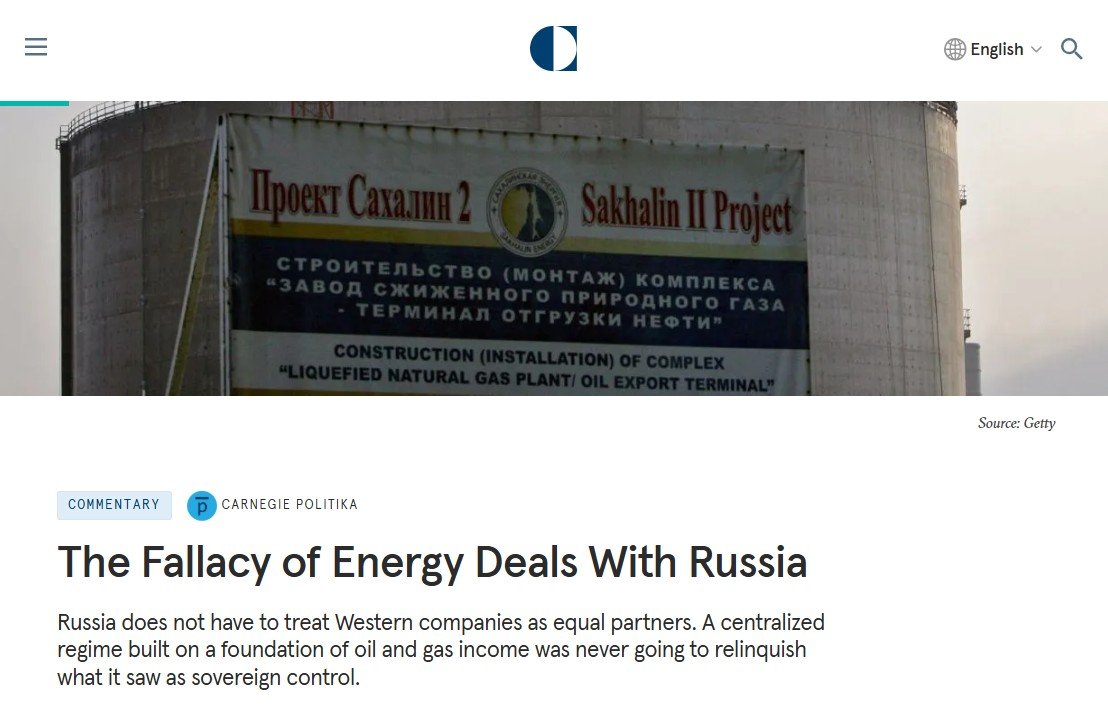
The analyst contrasts this with Russia, where, he writes, almost every major deal signed by Western companies has since been radically altered. The commentary cites BP’s forced sale of its stake in the TNK-BP joint venture to the state company Rosneft, Shell losing its operator status in the Sakhalin-2 project and selling its stake to Gazprom at a cut-rate price, and Exxon having to write off its investment in the Sakhalin-1 project.
Carnegie: energy deals with Russia put Western interests at risk
According to the author, a centralized regime dependent on oil and gas revenue has never relinquished control over sectors it views as matters of sovereign authority, with state interests consistently placed above commercial ones. Chow links this to the Donald Trump administration’s diesel agreement with Russia and other energy projects reportedly proposed by the Kremlin, including the resumption of Russian pipeline exports to Europe, Russian participation in the Alaska LNG project, and the sale of sanctioned LUKoil’s international assets.
The author warns that speculative commercial interest should not be allowed to shape foreign policy, and that believing energy deals could bring peace to Ukraine is self-deception.
